




richboy2307
Staff
-
Joined
-
Last visited
Everything posted by richboy2307
-
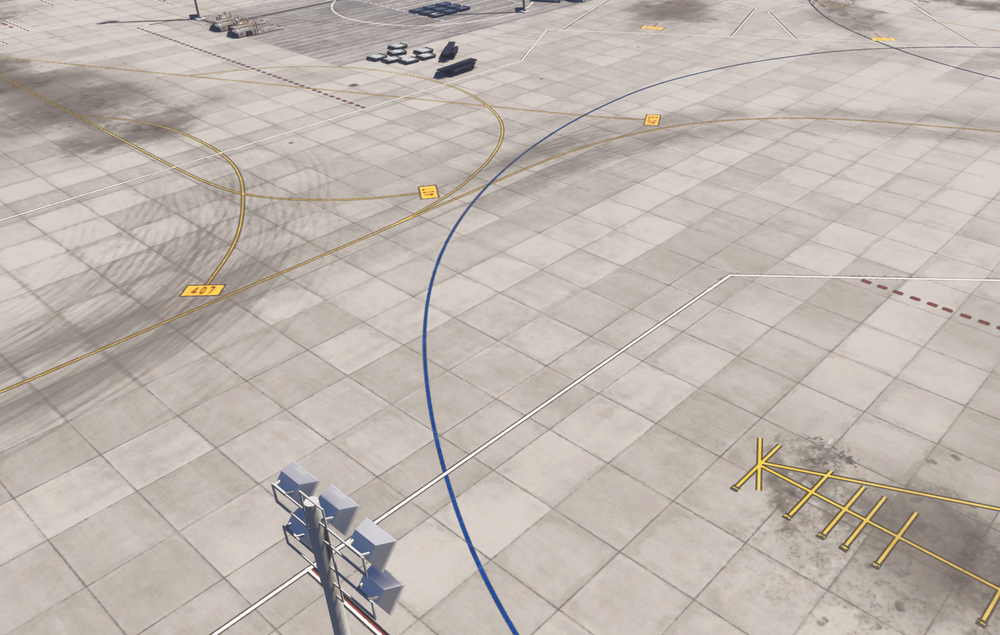
Hi, (Click to enlarge image) Sorry we're not able to reproduce this issue. Please try to reinstall the scenery via the iniManager and clear your scenery indexes. You may also try running with only KLAX in your community folder to rule out any addon conflicts. You don't need to re-install all your addons, simply follow the steps below to test: 1. Rename your existing community folder to ``_Community`` 2. Create a new ``Community`` folder in its place. 3. Copy only the ``inibuilds-airport-klax-losangeles`` folder inside it. 4. Run the sim and see if same problem persists. If you are no longer seeing the problem, then there is a potential conflict and you will have to figure out which addon is causing the issue via trial-and-error testing. To restore your addons 1. Delete the new ``Community`` folder you made 2. Rename the ``_Community`` folder to ``Community`` Thanks!
-
Thanks reported.
-
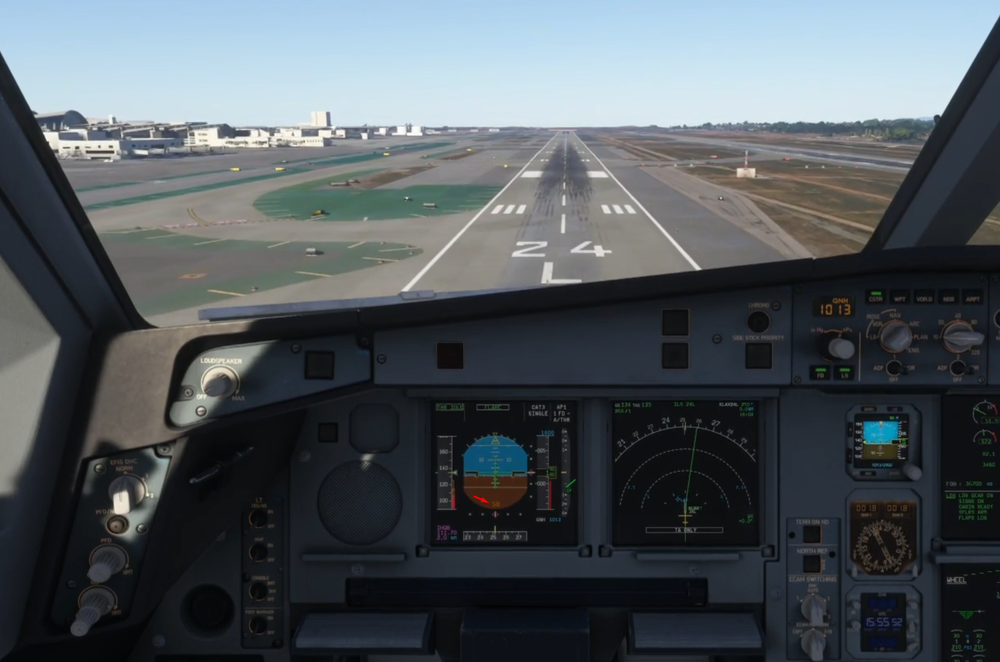
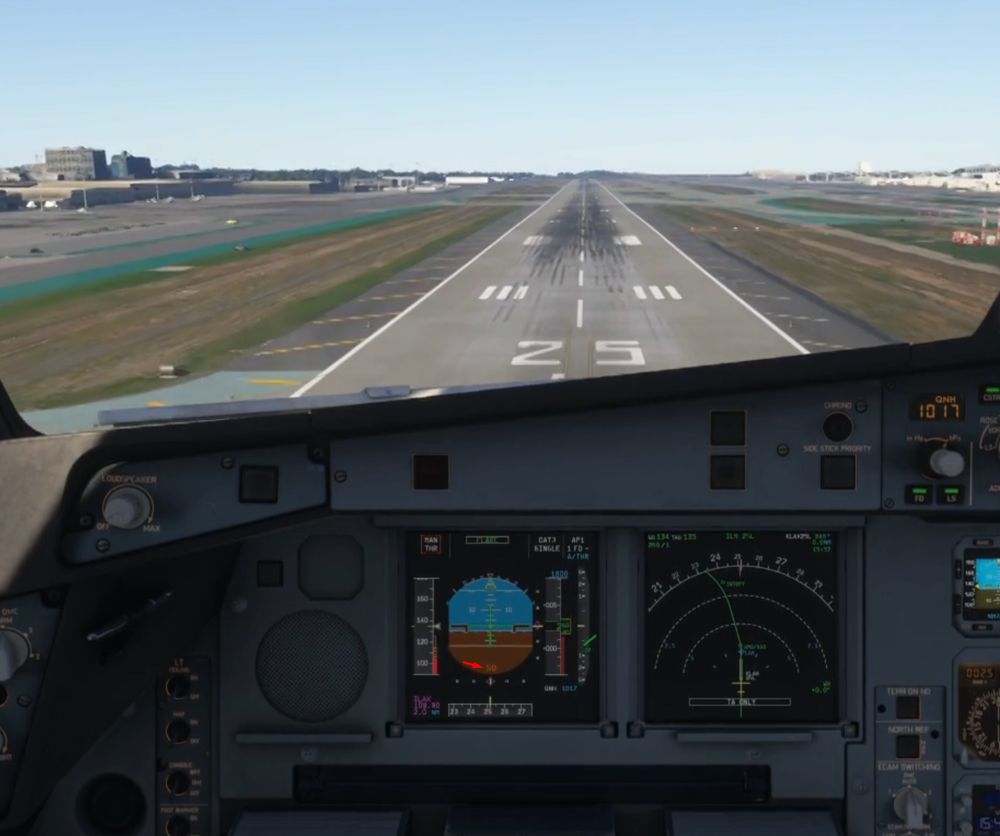
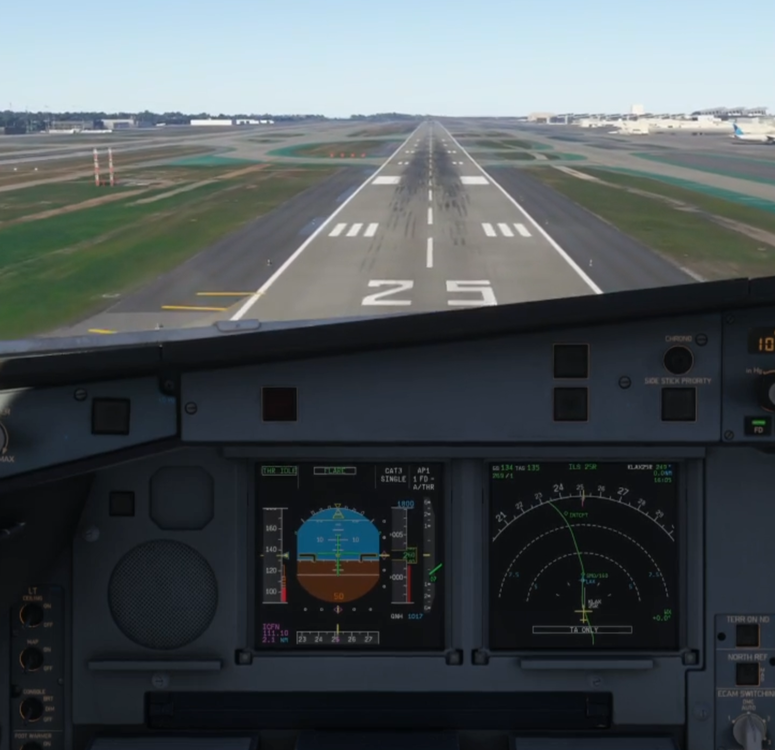
Absolutely agreed, which is why we do run tests for these with autolands to try to get best co-incidence for the glideslopes and PAPIs. There are certain sim limitations that prevent this being perfect (ie matching real life 1:1), for example although the runways have slopes/terrain following, in the sim data, each runway still only has a single height value calculated at the centroid. This results in a slight difference between the PAPI GS (which sit at the 'physical' ground height) and the ILS GS position. Sometimes there's other limitations such as discrepancies between datasets (e.g. at OMDB between Navigraph vs Sim Default Navdata). The scenery editor tools available for such adjustments are also fairly imprecise with a lot of trial and error required in the placement of these. Anyways, in relation to your query below are screenshots from a video recorded during earlier test builds using Sim default navdata on the A330 on 24/25 Runways. Its not 100% co-incident with PAPIs at 50ft due to aforementioned issue but the glideslope does intercept 50ft AGL at about the the start of runway threshold as we observed in testing. Its not perfect but we believe it to be within margin of error for whatever precision the sim allows us to achieve. 24L 24R 25L | 25R Just for checking your report, tried with latest Navigraph navdata (2503 rev3) as well in the A321neo and cannot reproduce the Glideslope being *above* the user at 50ft RA at the threshold. If you are simply testing by slewing, do note the instruments (particularly GlideSlope) may not update until aircraft is released and as such not reflect the proper values in slew. Thanks!
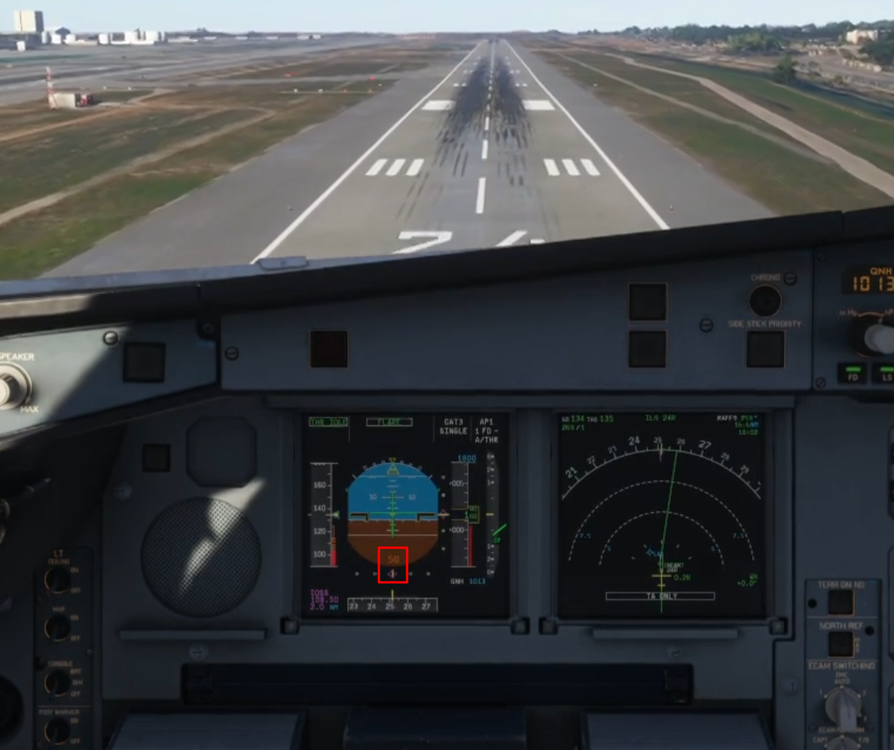
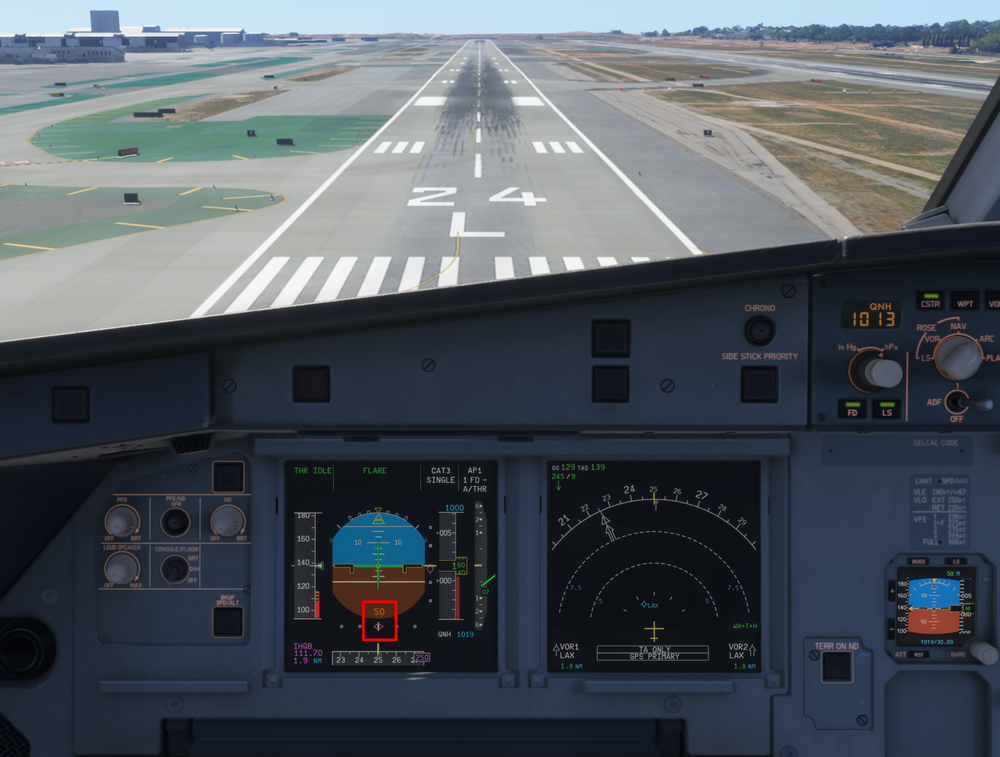
-
Duplicated. Please see linked response and use the post below for further communication of this issue: Thanks!
-
Hi all, Thanks for your reports. Unfortunately extremely long load-times appears to be a core sim issue that we have no control over. Personally not experiencing this nor is it like this for any of our other testers at the moment on SU1 (FS24 v1.3.25.0). A much smaller sample who are on the SU2 Beta also cannot reproduce the loadding issues described above. It may sound tedious, however you may try a full sim re-install to see if it resolves the issue in your instance. It is recommended by MS/Asobo, especially if you installed your sim initially during first few weeks post-launch, as there is a chance that core sim files are "corrupted" due to the server issues that were present at the time. Some additional context: Some of us internally (dev team and testers) were experiencing weird issues with certain scenery 3D objects (e.g. PAPIs or twy edge lights) that were very slow to load (or not loading at all) after you spawn in. This was resolved after re-installing the sim. All that were experiencing such issues had installed FS2024 on launch or during the affected period. So while rare, it can happen and worth a try if you continue to experience such issues. Thanks!
-
Hi @nmahink Thanks for your report. FS2024 has a new LOD system that works differently to FS2020, hence why you wouldn't have seen this in 2020 or a version of the scenery made with the FS2020 SDK. There are considerable challenges still to this system and what you're noticing is one such instance. In order to keep it loaded in at a higher Level of Detail (LOD) you have to make the bounding sphere of the ATC Tower asset extremely large, which will in turn can have a significant performance impact on some systems as the sim does not like them to be so large. Setting them to standards as described in the SDK leads to "aggressive" pop-in or "LODing" so a balance has to be struck. The way it is currently is the best that can be achieved without sacrificing too much performance for the end users as we have seen in testing. We are hoping that further refinements to this system are made in future sim updates so we can better harness the performance benefits with less sacrifice of visual fidelity. Asobo are aware of this as this issue has also been raised by other scenery developers, for example: https://devsupport.flightsimulator.com/t/bounding-sphere-issue-lods-screen-size/13580/10 Thanks!
-
Hi all, Thanks for your reports. As mentioned above, if you are on SU2 Beta, there is a known sim issue at the moment that affects jetway operation. This is not caused by KLAX or any scenery in particular. Here are some screenshots of these jetways working as expected in SU1 (FS24 v1.3.25.0). Note: There is a new GSX Profile for FS24 KLAX Enhanced. In theory you can have both profiles and GSX should switch automatically based on the sim, however in practice we have seen this feature not working as intended for some users. For such users GSX still tries to load the FS20 profile in FS24 (or even both profiles at the same time) which can cause unexpected issues. In case you are experiencing issues on SU1, please try to delete your FS20 profile and then restart COUATL. Thanks!
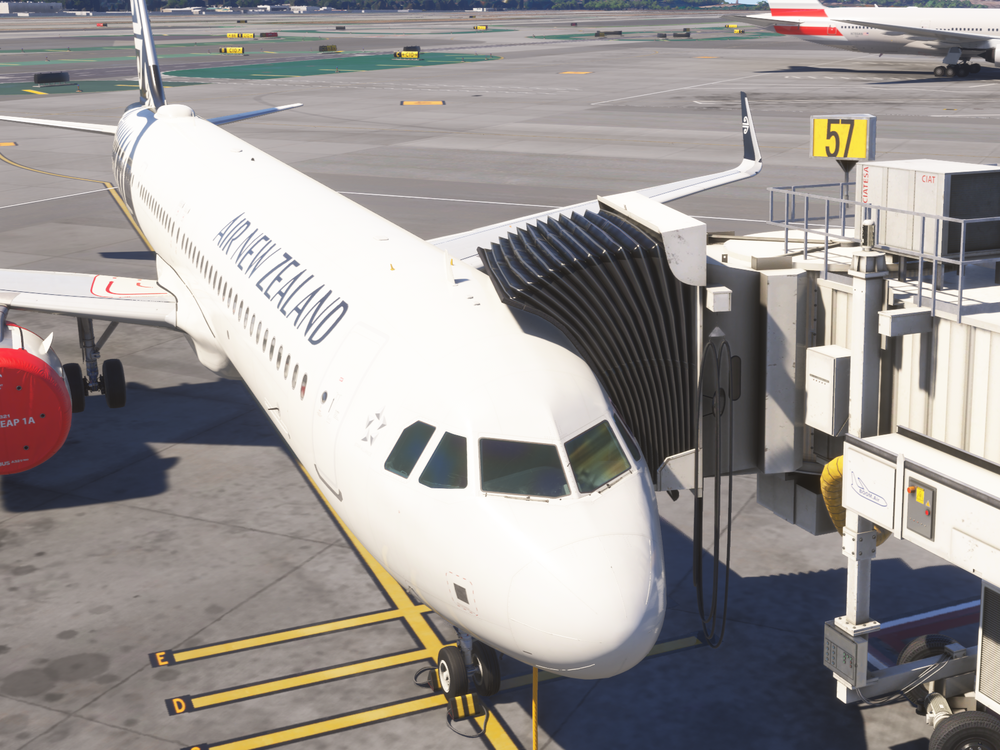
-
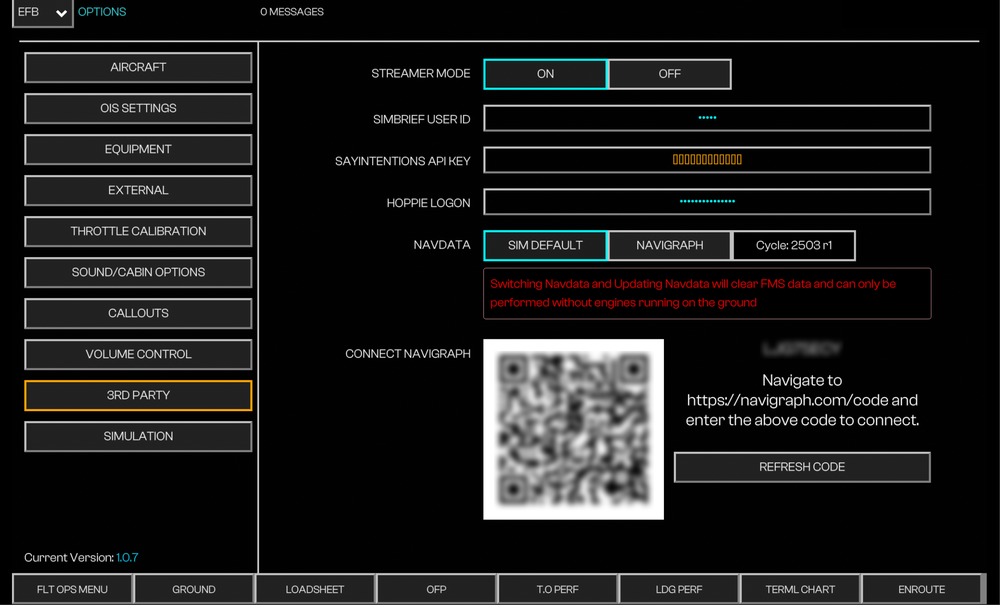
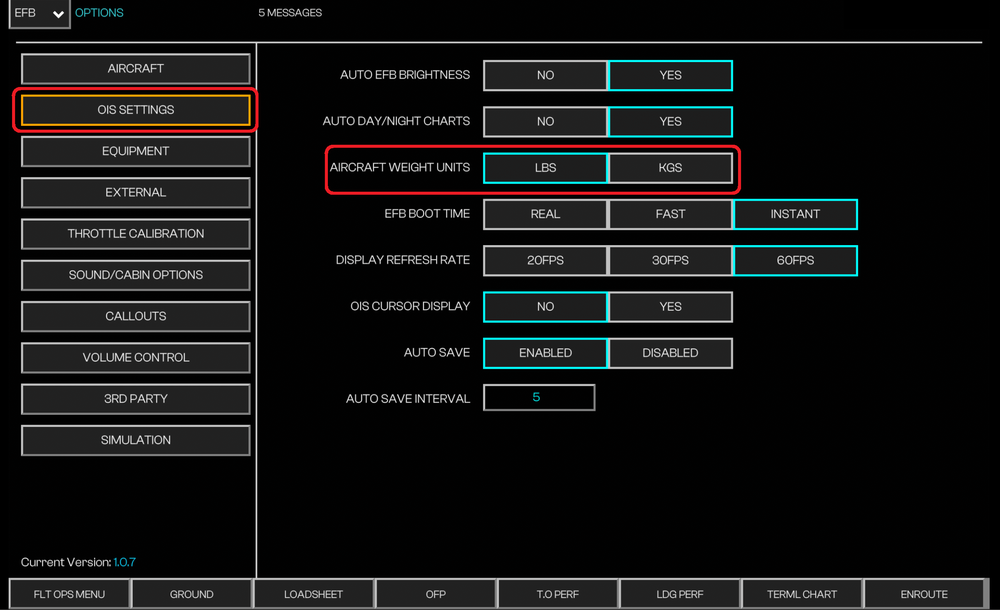
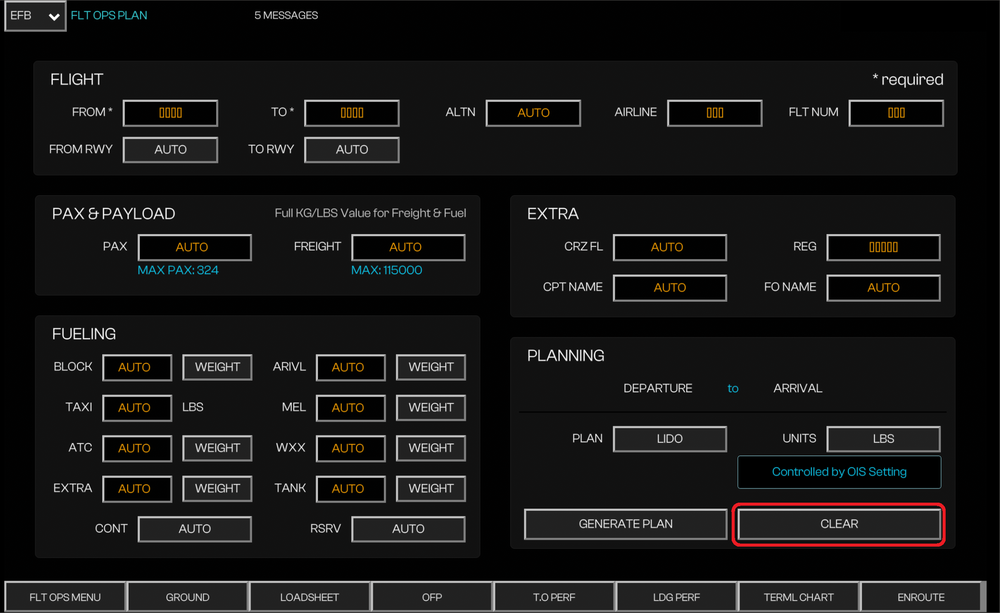
We're excited to unveil deeper SimBrief integration in the iniBuilds A350 directly within the OIS (Onboard Information System). Say goodbye to switching between apps and windows — now you can plan your entire flight, from departure to arrival, right from the cockpit using the new FLT OPS PLAN page! Accessing the Planner The new planner has its own dedicated page which can be reached via FLT OPS MENU > FLT OPLS PLAN. (Click to enlarge image) Creating a SimBrief Flightplan via the Planner In order to create your flight plan, only the following fields are mandatory FROM* - Input your Departure airport's 4-letter ICAO code here (e.g. LPFR) TO* - Input your Arrival airport's 4-letter ICAO code here (e.g. EGLL) Then, press the GENERATE PLAN button to create a SimBrief Flightplan using the default "AUTO" values. (Click to enlarge image) For additional customization, you can also tweak the below fields which are optional ALTN - Input your Alternate airport's 4-letter ICAO code here (e.g. EGCC). Default value is AUTO. AIRLINE - Input any 3-letter ICAO airline code (e.g. BAW) FLT NUM - Input any alpha-numeric flight numer (e.g. 25A) FROM RWY - Select your Departure airport's desired runway. Default value is AUTO. TO RWY - Select your Arrival airport's desired runway. Default value is AUTO. PAX - Input the number of desired passengers. Values exceeding the MAX will use MAX instead. Default value is AUTO. FREIGHT - Input the desired weight (KG/LBS) of cargo. Values exceeding the MAX will use MAX instead. Default value is AUTO. CRZ FL - Enter your desired Cruise altitude in 3-digit flight levels (e.g. 380 for 38,000ft). Default value is AUTO. REG - Enter your desired aircraft registration. Default value is autofilled from the ATC ID field of aircraft.cfg. CPT NAME - Input custom Captain's Name on the OFP. Default value is AUTO. FO NAME - Input custom First Officer's Name on the OFP. Default value is AUTO. PLAN - Choose the desired OFP format from the list that shows on screen. Default value is LIDO. FUELING section - Choose between WEIGHT or MIN units and enter the desired numeric value for that particular fuel section on your OFP. Default value is AUTO. To reset the page back to its default state, click the CLEAR button. (Click to enlarge image) To change the planning units between KG/LBS, change the Aircraft Weight Units from the OIS Settings page. (Click to enlarge image) Using your New Flightplan - OFP Once you have successfully generated a flight plan, the OIS will automatically go to the OFP page and give you a 'PLAN GENERATED SUCCESSFULLY' notification at the top of the screen. That's it! Your new flightplan is now active on SimBrief, same as if you had generated via their Dispatcher Tool or Website. Now you may use this new plan on the FLT OPS STATUS, LOADSHEET, TO PERF or LDG PERF pages of the OIS by Importing or syncing with Simbrief as usual. You may also request your new flightplan on the FMS via the CPNY F-PLN REQUEST button on the INIT Page. For more information please see the following guides:
-
We're excited to unveil deeper SimBrief integration in the iniBuilds A350 directly within the OIS (Onboard Information System). Say goodbye to switching between apps and windows — now you can plan your entire flight, from departure to arrival, right from the cockpit using the new FLT OPS PLAN page! Accessing the Planner The new planner has its own dedicated page which can be reached via FLT OPS MENU > FLT OPLS PLAN. (Click to enlarge image) Creating a SimBrief Flightplan via the Planner In order to create your flight plan, only the following fields are mandatory FROM* - Input your Departure airport's 4-letter ICAO code here (e.g. LPFR) TO* - Input your Arrival airport's 4-letter ICAO code here (e.g. EGLL) Then, press the GENERATE PLAN button to create a SimBrief Flightplan using the default "AUTO" values. (Click to enlarge image) For additional customization, you can also tweak the below fields which are optional ALTN - Input your Alternate airport's 4-letter ICAO code here (e.g. EGCC). Default value is AUTO. AIRLINE - Input any 3-letter ICAO airline code (e.g. BAW) FLT NUM - Input any alpha-numeric flight numer (e.g. 25A) FROM RWY - Select your Departure airport's desired runway. Default value is AUTO. TO RWY - Select your Arrival airport's desired runway. Default value is AUTO. PAX - Input the number of desired passengers. Values exceeding the MAX will use MAX instead. Default value is AUTO. FREIGHT - Input the desired weight (KG/LBS) of cargo. Values exceeding the MAX will use MAX instead. Default value is AUTO. CRZ FL - Enter your desired Cruise altitude in 3-digit flight levels (e.g. 380 for 38,000ft). Default value is AUTO. REG - Enter your desired aircraft registration. Default value is autofilled from the ATC ID field of aircraft.cfg. CPT NAME - Input custom Captain's Name on the OFP. Default value is AUTO. FO NAME - Input custom First Officer's Name on the OFP. Default value is AUTO. PLAN - Choose the desired OFP format from the list that shows on screen. Default value is LIDO. FUELING section - Choose between WEIGHT or MIN units and enter the desired numeric value for that particular fuel section on your OFP. Default value is AUTO. To reset the page back to its default state, click the CLEAR button. (Click to enlarge image) To change the planning units between KG/LBS, change the Aircraft Weight Units from the OIS Settings page. (Click to enlarge image) Using your New Flightplan - OFP Once you have successfully generated a flight plan, the OIS will automatically go to the OFP page and give you a 'PLAN GENERATED SUCCESSFULLY' notification at the top of the screen. That's it! Your new flightplan is now active on SimBrief, same as if you had generated via their Dispatcher Tool or Website. Now you may use this new plan on the FLT OPS STATUS, LOADSHEET, TO PERF or LDG PERF pages of the OIS by Importing or syncing with Simbrief as usual. You may also request your new flightplan on the FMS via the CPNY F-PLN REQUEST button on the INIT Page. For more information please see the following guides:
-
Hi sorry we're not able to reproduce the issue currently internally or amongst any of our testers. Having both tiller and rudder axis assigned to different hardware, and trying both to link them via the RUDDER CONTROLS TILLER option or not. Not seeing the issue across any phase of flight (pre or post). In case you're having this issue consistently, I'd recommend trying with an empty community folder (only A350 installed) to rule out any sort of addon conflicts. To run with a blank community folder without losing your addons: 1. Rename your existing community folder to ``_Community`` 2. Create a new ``Community`` folder in its place. 3. Copy only the ``inibuilds-aircraft-a350`` folder inside it. 4. Run the sim and see if same problem persists. After finished testing, you can close the sim, and restore your original folder as follows: 1. Delete the new ``Community`` folder you made 2. Rename the ``_Community`` folder back to ``Community`` Thanks!
-
Do you mean there is a delay in the 3D throttle levers themselves moving (as seen on pedestal) or you're referring to the THR% / N1% reading on the Engine display? If the latter, then that is expected as there is a delay in spool-up of the engines going from IDLE to TOGA. It won't be instantaneous. It would help if you could include a video of your observed behaviour for our reference. Thanks!
-
-
Hi @JonnyT1041 Thanks for your report. Shared with the team. WASM Crash Can you please specify the additional info that may help in reproduction of your issue DEP/ARR airports as well runways used. I'm assuming EDDM-FAOR based on routing but would be good to know for sure. Was the ANF active on both CPT/FO ND or only one of them? What was the active ND Mode (ARC/NAV/PLAN) when you set it to ZOOM or had the crash? Thanks!
-
Not sure what's different about the 2020 install on your instance. We all tried internally, and a few of our testers as well yet we cannot reproduce the issue on either BATT or Ground Power. Example: 2025-04-02 22-35-23(1).mp4 They're highlighted blue to indicate which one is the active option if that is what you mean. It will also highlight in blue as you hover your mouse over it. So for example in the below image DISPLAY TYPE OLD is active. This is part of the redesign in one of the last few updates. Thanks!

-
Hi @LineDX Thanks for your report. 1. I'm not able to reproduce this issue. I've tried spawning at the gate at a few different airports in the -900 and -1000 and each time its loaded with a proper THS value. Can you please share exactly which variant and airport/gate you're having this issue at? 2. Thanks noted. 3. Will keep an eye out on next test flights but in the meanwhile if you observe any specific condition it didn't jump on let us know for tracking. 4. It changes based on conditions (OAT, RWY COND, A-ICE, TOW, AIR COND and TORA). In its computations it will try to go for maximum thrust derate possible for the given conditions. 5. Further refinements in progress regarding rotation behaviour. 6. & 7. Thanks, I was able to reproduce. Noted. 8. The airport shown for ANF will depend on distance from PPOS to airports. There may be instances where this difference is marginal for both DEP/ARR airport and as such one airport may get shown over the other. Thanks!
-
The Autosave function is now available in the v1.0.6 of the iniBuilds A350 Airliner for Microsoft Flight Simulator 2024 & 2020! With user-configurable time intervals, you can tailor how often the aircraft automatically saves its state to suit your needs—and you can also manually save at any point with a simple click. Creating Custom Saves via the OIS To create a custom save via the OIS: Navigate to OIS Autosave Page (FLT OPS MENU > AUTOSAVE) Click 'SAVE NOW' button at the top right corner Enter a desired name for the autosave Your custom save will appear on the list on the right side of the page. (Click to enlarge image) Loading Custom / Auto Saves via the OIS To any save file via the OIS: Navigate to OIS Autosave Page (FLT OPS MENU > AUTOSAVE) Click the desired save from the AUTOSAVES or CUSTOM SAVES list. The sim may take a few seconds to load the proper panel states after teleporting you to save location. (Click to enlarge image) Sharing Custom Saves All custom and auto saves are stored as ".bin" files in your WASM folder. These can be shared with other users or our staff for support requests. Simply drop the save files in the folders listed below and then reload the OIS autosave page to see it on the list. The autosaves folder is found at the various paths listed below: (Click to enlarge image)

-
The Autosave function is now available in the v1.0.6 of the iniBuilds A350 Airliner for Microsoft Flight Simulator 2024 & 2020! With user-configurable time intervals, you can tailor how often the aircraft automatically saves its state to suit your needs—and you can also manually save at any point with a simple click. Creating Custom Saves via the OIS To create a custom save via the OIS: Navigate to OIS Autosave Page (FLT OPS MENU > AUTOSAVE) Click 'SAVE NOW' button at the top right corner Enter a desired name for the autosave Your custom save will appear on the list on the right side of the page. (Click to enlarge image) Loading Custom / Auto Saves via the OIS To any save file via the OIS: Navigate to OIS Autosave Page (FLT OPS MENU > AUTOSAVE) Click the desired save from the AUTOSAVES or CUSTOM SAVES list. The sim may take a few seconds to load the proper panel states after teleporting you to save location. (Click to enlarge image) Sharing Custom Saves All custom and auto saves are stored as ".bin" files in your WASM folder. These can be shared with other users or our staff for support requests. Simply drop the save files in the folders listed below and then reload the OIS autosave page to see it on the list. The autosaves folder is found at the various paths listed below: (Click to enlarge image)
-
Thanks I believe you have reached out to Direct Support as well with this issue so the team is looking into it. The authentication and log-on is handled directly by the Navigraph WASM which we have incorporated into the A350. So if you are having issues with authentication to Navigraph services, this will happen on the A350 as well as its essentially going through the same backend. You can try Run a VPN to another country to rule out any ISP-related issues Run your sim as Admin Add Antivirus and Firewall exclusions to sim root directory and community folder Also to be sure, what is user Windows user name? I have seen users report issues in general with their sims when using "special characters" in this path. I've also seen users have similar issues when their sim (or Windows User) does not have proper read/write permissions for the AppData directory, as a result addons that write to default paths for "work" folders within the sim (Like Navigraph or A350 WASM for example) cannot function as intended. So you may try to change your UAC settings (or run the sim as admin) to try and alleviate some of these permissions issues. Thanks!

-
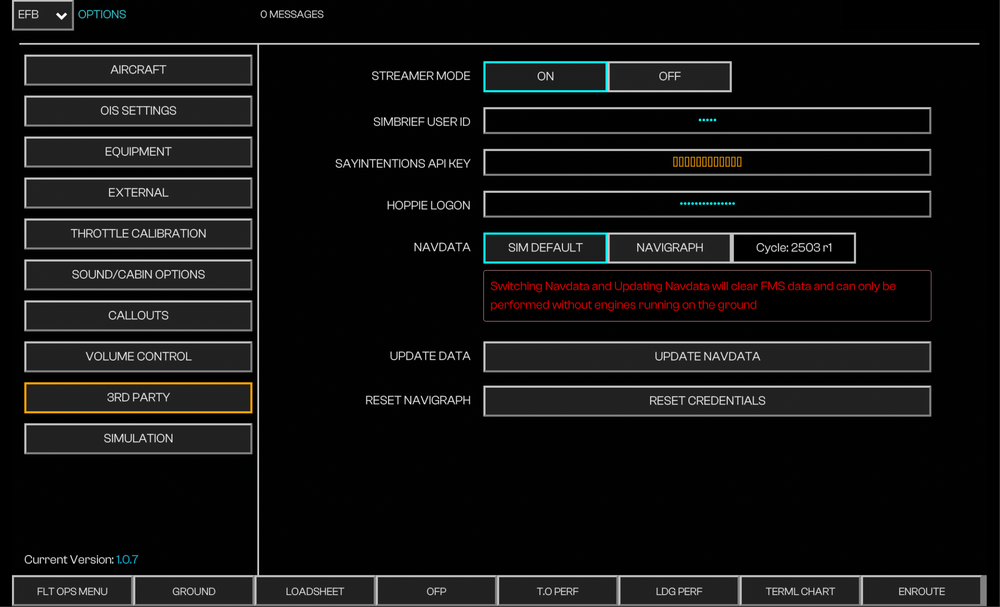
Hi, Thanks for reports guys. The team is actively investigating and working on further refinements to this aspect of the product. What is happening? A desync in token authentication occurs on some systems and thereby features that rely on an actively authenticated Navigraph connection stop working as intended. What have we done? There have been numerous fixes implemented to tackle this issue already on our end since v1.0.2. For context, select few customers who reported they were able to reproduce this issue consistently upto v1.0.2 were chosen to test the fixes implemented so far. They had confirmed the fixes to be effective on their end, however we're still seeing occasional reports such as yours here so we'll keep looking into it. What can you do? In the meanwhile in case you run into this issue, you may try to force a token reset by Navigate to FLT OPS MENU > OPTIONS > 3RD PARTY Pres RESET CREDENTIALS Press REFRESH CODE to generate latest then re-do the authentication process For OIS Charts, after successfully resetting the token, Reselect the desired airport from list or type in the ICAO in search field Click on desired chart to force a reload. Give it a few seconds to load. For OIS Enroute Map, after successfully resetting the token, Change to a different map type to make it reload. For ANF, after successfully resetting the token, Set ND Display mode to PLAN Open the ANF options menu and navigate to ARPT SEL tab Choose your desired airport and then hit DISPLAY AIRPORT Note: Not all airports have the pre-requisite data on the Navigraph database - Airport Mapping Database (AMDB) - that is used for ANF map creation. You can also see this on Navigraph Charts app by zooming into an airport in any of the map views. You'll note the lack of runway or taxiway definition data at airports not in AMDB. In the example below LEIB lacks data, hence doesn't exist on ANF meanwhile LEBL does. (Click to enlarge image) Thanks for your patience!


-
Hi @Wothan1967 Thanks for your report. Shared with the team. If you are experiencing issues meanwhile I'd recommend reinstalling the scenery. Apologies for any inconvenience caused. Thanks!
-
Yes team is still working on LOD adjustments per user feedback. This process takes time and will be done in a future update. As user you can't do too much beyond increasing the 'Objects Level of Detail" distance in graphics settings, but do note this will come with a performance penalty. Thanks!
-
Yes as mentioned by AndyM, there are no static aircraft included with this scenery. If you are seeing statics, check your MSFS settings and disable air traffic there. Thanks!


-
Hi @Argaeus Apologies for delay in reply. But if you cannot find an order number, just put "123456" as the order number and include the other requested information proving proof of purchase. Thanks!
-
-
Thanks reported.


