
richboy2307
-
Posts
1685 -
Joined
-
Last visited
-
Days Won
83
Content Type
Profiles
Forums
Downloads
Everything posted by richboy2307
-
 Digital Radio and Audio Integrating Management System (DRAIMS) COMM Frequencies Management (VHF Page) The communication radios (VHF), Transponder Code (SQWK) and TCAS Modes are all controlled by the VHF page. which can be accessed by clicking on the VHF menu button on the top row. The active frequencies are displayed on the left. The standby frequencies are displayed on the right. To dial a frequency, first please select the desired Right-Line Select Key (RSK)(1). When the digits are blue, surrounded by a blue box, use the keyboard (3) to type in your desired frequency. To swap the active frequency, click on the desired Left-Line Select Key (LSK)(2). To swap the active radio, click on the desired Reception Knob(4) and Transmission Key(5). The active radio will light up green on both the Transmission Key(5) and on the digital display(6) NAV Frequencies Management (NAV Page) The NAV frequencies (LS,VOR, ADF) are normally controlled by the RADNAV page on the MCDU. To manually control frequencies via the RMP, you must first access the NAV Page by clicking on NAV menu button(1). Then you must switch the mode from AUTO to STBY NAV by clicking the second Left-Line Select Key (LSK)(2). Then, you may select the desired Right-Line Select Key (RSK)(3) to access the LS, VOR, ADF pages respectively. To input frequencies click on the desired Left-Line Select Key (LSK)(2). Then use the keyboard (4) to type in your desired frequency. On the VOR Page you can additionally enter the CRS by clicking the appropriate Right-Line Select Key (RSK)(3). Transponder (XPDR) / TCAS Management (ATC Page) Both the XPDR and TCAS are controlled via the ATC Page which can be access by clicking on the ATC Menu button(1). The various modes are toggled by clicking their respective Left-Line Select Keys (LSK)(2) and Right-Line Select Keys (RSK)(3). To select the XPDR SQWK Code you can click the fourth Left-Line Select Key (LSK)(2). When the digits are blue, surrounded by a blue box, you can use the keyboard (4) to type in your desired transponder code. Then you must click again the fourth Left-Line Select Key (LSK)(2) to confirm and activate the desired transponder code. Once active, the digits will turn green. Note: The XPDR 'ATC MODE AUTO' is required to for TCAS to be active. Additionally the XPDR 'ALT RPTG ON' is required for full Mode-C operations (Online Networks).
-
The CALL/RECEIVE functionality of the Audio Control Panel(ACP) is used to control communications. VHF1 is used for com1, and VHF2 for com2. To speak with the ATC, you need to select (press in) the appropriate transmission key (1). You will see it lit up (green) when enabled. To hear the ATC, you need to select (pull-out) the appropriate reception knob (2) and tune it's volume (rotate). You will see it lit up (yellow) when enabled.
-
There is an Electronic Flight Bag (EFB) located on either side of the cockpit (Captain and First Officer) which is intrinsically linked to the aircraft Flight Management System (FMS). It is also linked to some core simulator functions like setting your desired fuel and payload. Simply click the Menu buttons on the left to navigate the pages. Payload Page – This page allows you to set the fuel and load on the aircraft and apply it to the FMS. You can set your fuel and payload manually using the sliders or typing in the values into the text boxes. Alternatively, the 'Download SimBrief' icon* allows you to import your planned fuel and payload directly from your OFP. *Note: This feature only works after you have entered your Simbrief Pilot ID on the Options page. Your Pilot ID is found on the 'Account Settings' page on Simbrief. Options Page - Ensure your Simbrief Pilot ID (2) is entered in the EFB Options tab (1).
-
Throttle Calibration Calibrating your throttle correctly is key to achieving smooth control in Microsoft Flight Simulator 2024, especially when flying advanced aircraft like the Airbus. The calibration process is managed entirely within the Aircraft Electronic Flight Bag (EFB), and here we provide a step-by-step guide for setting up your throttle axis. General Calibration Steps: Reverse on Axis: If your throttle hardware does not have a reverse axis, make sure to select NO in the "Reverse on Axis" option on the EFB. If your hardware has a reverse axis, select YES to calibrate the reverse detents. Green Bar: This bar represents the current position of your throttle axis (ranging from 0% to 100%) and is used for setting your detents. White Bars (Detents): These bars indicate the throttle detents such as IDLE, CLB, FLX/MCT, and TOGA. You will assign these detents based on where you want them on your throttle. Calibration (Without Reverse on Axis): Click BEGIN CALIBRATION. Move the throttle to its lowest position (close to 0%) and click SET IDLE. Move the throttle to around 70% and click SET CLB to set the climb detent. Move the throttle to around 80% and click SET FLX/MCT for the flexible takeoff detent. Move the throttle to its maximum position (close to 100%) and click SET TOGA. Calibration (With Reverse on Axis): If your throttle has reverse functionality, the process is similar but with additional steps: Begin with the throttle in its maximum reverse position and click SET MAX REV. Move the throttle to where you want the IDLE REV position and click SET IDLE REV. Continue with the calibration process as described above for setting IDLE, CLB, FLX/MCT, and TOGA. This calibration ensures your throttle matches the detents for the aircraft, providing more accurate control and smoother flight operations. Follow these steps, and you'll have your throttle calibrated and ready for action in no time! For more MSFS 2024 FAQ please refer to:
-
All SimBrief profiles can be found here: https://forum.inibuilds.com/topic/24033-airbus-aircraft-simbrief-profiles-for-microsoft-flight-simulator-2024/
-
Good to know, thanks!
-
That is something you'd have to take up with the FSDT, but I reckon it might be due to the Marketplace encryption. Unsure if it can automatically recognize such airports compared to those in the Community folder (i.e. unencrypted). That being said, we have tested EGGW for PC (both Marketplace & iniStore versions) with GSX and latest World Updates and it is fully compatible. You may also download the custom GSX profile for EGGW from the iniManager. Thanks!
-
The airport is is not compatible with Asobo Handcrafted/World Update versions (none exist for EGGW), or any other 3rd Party Scenery versions of EGGW (Freeware or Payware). However the "default" base EGGW is not a conflict nor needs to be uninstalled. If you are talking about duplicated stands on the World Map and use GSX Pro, try to exclude jetways for EGGW from the FSDT Installer. I would also try to run an empty community folder with nothing but iniBuilds Luton in it, to rule out conflict against other 3rd party content. To run with a blank community folder without uninstalling any addons: 1. Rename your existing community folder to ``_Community`` 2. Create a new ``Community`` folder in its place. 3. Copy only the ``inibuilds-airport-eggw-luton`` folder inside it. 4. Run the sim and see if same problem persists. If the problem is gone, then there is a potential conflict in your existing community folder, and you will have to rule out which one via trial and error (obvious conflicts would be mods that affect EGGW, or terrain or BGL files such as GSX) When you are done testing, then you can close the sim, and restore your original folder as follows: 1. Copy the ``inibuilds-airport-eggw-luton`` folder back to ``_Community`` 2. Delete the new ``Community`` folder you made 3. Rename the ``_Community`` folder to ``Community`` Thanks!
-
Hi @jdk1995 Please try to reinstall & run the aircraft without your antivirus/firewall enabled. If that works, add an exception to your community folder and any '.js' files in that folder. Both in antivirus and firewall programs. I've seen such reports in the past with other aircraft and that turned out to be the solution. Thanks!
-
Hi @Gewstav What keybind are you using for the Parking Brakes? I have mine set to 'TOGGLE PARKING BRAKES' and am not noticing this issue. Also able to set the parking brake on/off using the button on the pedestal. Thanks!
-
Hi @wangxr_tom Thanks for your report. Was able to reproduce the issue, reported to the team.
-
Hi @Fussy Not KwikFlight but as it says on the trailer, be compatible for both FS2024 and FS2020 with a single purchase. More info here: https://forum.inibuilds.com/topic/23970-kwikflight-bone-for-microsoft-flight-simulator-released/ Thanks!
- 1 reply
-
- 1
-

-
Hi Thanks for report. Will share with KF team.
-
Hi, The reports have been shared with the team. However some points to note: I am not able to reproduce this issue. It would depend on the VOR/TACAN whether or not it has a DME attached to it within the sim data. If it has it, it will show up. I tested at KTPA by tuning into PIE (VORTACAN w/ DME) vs MCF (TACAN without DME). I was able to receive DME from PIE, but not from MCF as expected. Also tested on LAL (VORTACAN w/ DME) and working as intended. I did notice a bug with the channel identifier on TACAN always showing as "Y", and will report to team. This one is a sim issue actually, as the CDU is using the default sim flight-planner (same as can be found in the A320neo v1). It doesn't take airways too well and you have to enter point-by-point instead. The planes that don't have this issue are using a custom flight-planner (like the A320neo v2 or any of the WorkingTitle enhanced avionics). But anyways reported to the team if they can do anything about it. Thanks!
-
Hi @HMVR The loudness is intentional per the team, as requested by users. You may turn down the 'Engine' slider from the sound settings to a value that is more comfortable. Thanks!
-
Please ensure photogrammetry is enabled in the settings. Also try to clear your scenery indexes, it is recommended to do so after you add/remove scenery, especially if you loaded into an airport with 2 sceneries active at the same time. Instructions on how to clear scenery index: Thanks!
-
Thanks for updating. Sorry about the inconvenience. The team is aware about the issues some users face making purchases directly via the iniManager and working on long-term fixes for it. In the meanwhile, if you have this issue in the future you may try to make the purchase directly through our website (inibuilds.com) and then use the iniManager to install the product from the 'My Products' section. Thanks!
-
@Vick34 @angrydwarf Update 1.0.1 is out which addresses the issue of inoperative switches and buttons faced by some users when KF Spirit is also installed, along with a few other fixes (such as wing decal on Desert Storm livery). Full changelog here: Thanks!
-
Yes both are modelled, along with the new runway exit lights and turnpads post the 2021 expansion/repaving.
- 1 reply
-
- 1
-

-
Hi @Cygnifick Thanks for your report. Shared with the team.
-
Ok thanks, also added above to the report. To me it is seeming more likely related to the engine tripping momentarily, possibly due to some null fuel value output being provided. But in any case, dev team will look into it and action for next update in case they find something. Apologies for inconvenience caused. Thanks!
-
Hi thanks for getting back. Yeah this does not sound like a WASM crash either, as in those instances all the systems will stop responding/updating values completely. Here, as with the screenshots it does appear as if there is some invalid fuel value (particularly burn) being sent that is causing the system to trip. Or there is a very momentary loss of fuel flow which will trip things like the overhead AP switches. Can you just cross check your bindings and ensure there is nothing that affects fuel by chance (e.g. Mixture, Fuel / Condition Levers). Also anything that could affect electricals (generator/battery etc)? At the moment, I think the electrical issues are a result of the fuel system fault which is tripping the generators perhaps. But anyways, will add the above info to your report for the team to investigate further. Thanks again!
-
Hi, thanks for the report. I'll share the log with the team to see if there's any hints there. However, none of those items you've mentioned should cause such issues. Personally I run with FSUIPC7, SPAD.Next, LittleNavMap, Vpilot and occasionally VA trackers... and unless specifically testing fuelling features, also always use the "Finish Now" button and have yet to encounter such crashes. Also just additional context/information, there are no known instances of such crashes (i.e. not a WASM Crash) internally or through any beta testers in over 200 hours of collective testing of this particular build. Certainly an odd issue and hopefully we can find its source from this info. As this bug is also not reliably reproducible by affected users, it is really hart to ascertain the root cause. Thanks!
-
Hi @MarcusVT, Can you try to delete the contents of these folders below. That should re-compile the module files for the A300 (same as on first launch). Also advisable to recalibrate your throttles after in the EFB. Steam: MS Store: Thanks!
-
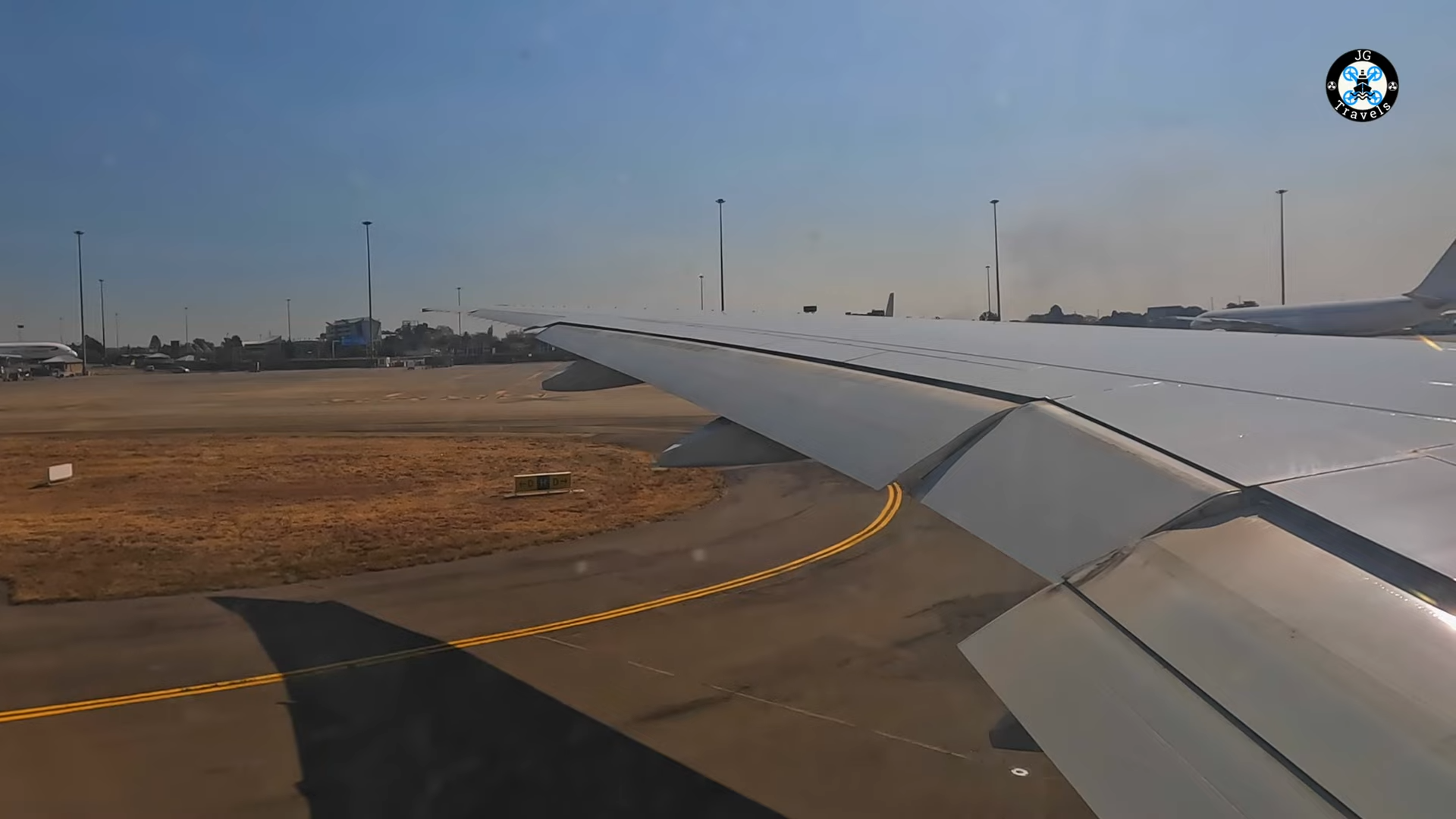
Hi @vanislepilot Thanks for your feedback. We're glad you're enjoying the scenery. If you're referring to the sign marked in the image below, that is correct as its indicating D as the next taxiway behind it.