



All Activity
- Past hour
-
UmaruLiu joined the community
-
If it's HTML/JS-based, you might need a brief RPN script to fetch the substring value for the StreamDeck display. Hopefully can release the full SDK/L-Var list for the L1011 soon to save us from reverse-engineering.
-
starlingjolie9 joined the community
- Today
-
vodkamamee joined the community
-
TomorinAnon joined the community
-
Anyone notice the Inibuilds A380 still stutters still on final approach, and upon touchdown is pretty much already slowed down if not almost stopped. I am finding that I am no getting a complete rollout. Its pretty much like I touchdown and then it feels like I have almost stopped and then put the thrust reversers and almost come to an immediate stop. I don't get this when I landing any of my PMDG products, TFDI MD11 or the Inibuilds A-350. Is there anything I can do to improve this?
-
Television in the Netherlands is changing fast. Traditional cable packages keep getting more expensive, and more households are exploring internet-based alternatives. One of the most popular options is IPTV—internet protocol television—which delivers live channels, films, and series over your broadband connection instead of a coaxial cable or satellite dish. The technology itself is well established. The real challenge is choosing the right IPTV provider—one you can actually trust. This guide walks you through what to compare, what it costs, and which warning signs to avoid. What Is IPTV and Why Is Interest Growing?IPTV works on any device that runs a compatible app: a Smart TV, an Amazon Fire TV Stick, an Android TV box, a phone, or a tablet. There's no decoder to install and no technician to book. The Dutch Consumentenbond notes in its overview of watching TV over the internet that the best option depends entirely on what you want to watch. For viewers who want flexibility without long contracts, platforms like z2u.com have become a practical starting point. Rather than committing to a single provider upfront, you can explore IPTV Account options that suit different budgets and viewing habits—an approach that's particularly useful if you're still testing the waters. Seven Checks Before You ChooseBefore committing to any IPTV service, run through this checklist: Transparent pricing. Prices, durations, and the number of simultaneous connections should be visible before you create an account. A real trial. A free trial period (gratis proefperiode) lets you evaluate picture quality, channel lineup, and stability on your own connection. Visible company details. Look for a company name, contact options, terms of service, and a privacy policy. Reachable support. Ask a question before you pay and see how quickly and clearly you get a response. A clear refund policy. Read what happens if the service doesn't work as promised. Device support. Confirm that your television, streaming stick, or box is supported—and whether installation help is offered. Stability at peak hours. Test on a busy evening, not at three in the morning. A reliable provider should pass all seven checks. If one or two are missing and the price seems remarkably low, caution is justified. What Does an IPTV Subscription Cost?Prices vary by provider, subscription length, and the number of connections. As an example, ExtremeIPTV lists a single-connection IPTV subscription from EUR 12.99 per month, with longer durations costing less per month. Prices change frequently, so always verify current rates. Be wary of the absolute lowest price on the market. A cheap subscription that drops out during a match or an evening film often costs more in frustration than a fairly priced service that simply works. If budget is your priority, it's worth comparing Buy Cheap IPTV Account deals on marketplaces like z2u.com, where you can weigh price against seller reputation before spending anything. For a broader Dutch perspective, guides such as IPTV Nederland explain how providers present devices, content, and pricing. Whichever source you use, always compare the current terms on the provider's own website before deciding. Know Your Rights When Buying OnlineDutch consumers have a cooling-off period for many online purchases and services. The consumer authority ACM explains how the cooling-off period for online services works and when you can lose it—for example, if you agree to an immediate start. The rules depend on the situation, so read the terms carefully before you pay. (This is general information, not legal advice.) Internet Speed and DevicesA stable connection matters far more than a high headline speed. A cable between router and television—or solid Wi-Fi coverage—often does more than an expensive internet upgrade. Test while you would normally watch, and keep an eye on how many screens stream simultaneously. Where to Buy an IPTV Account SafelyOnce you've narrowed down what you need, the next question is where to buy. Dedicated marketplaces offer buyer protection and seller ratings that standalone provider websites often lack. On z2u.com, for instance, you can Buy IPTV Account listings with clear pricing, connection details, and seller feedback—making it easier to compare options side by side before committing. This is especially helpful if you want to start with a short period and upgrade only once the service has proven itself. ConclusionIPTV can be a flexible and affordable way to watch television—but only if you choose carefully. Compare prices openly, insist on a trial, verify company details and support responsiveness, and know your rights as a consumer. Start with a short subscription and commit for longer only after the service has proven reliable on your own connection. Whether you explore dedicated providers directly or browse IPTV Account options on z2u.com, the same principle applies: transparency and testing beat tempting prices every time.

-
jiaolix joined the community
-
Hazhazery joined the community
- Yesterday
-
Brandon Burns joined the community
-
nam2144 joined the community
-
liconey joined the community
-
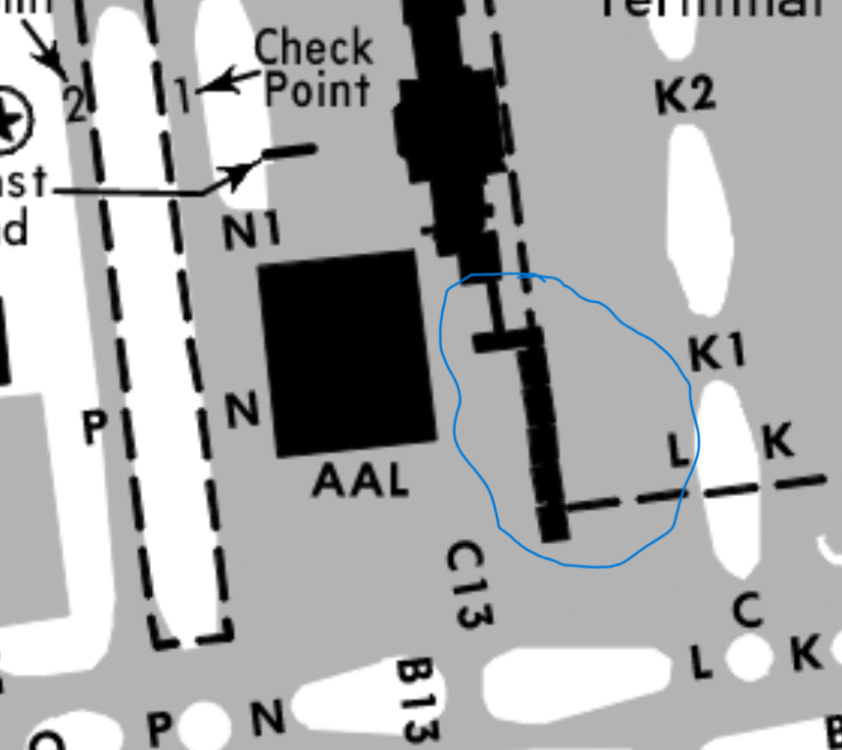
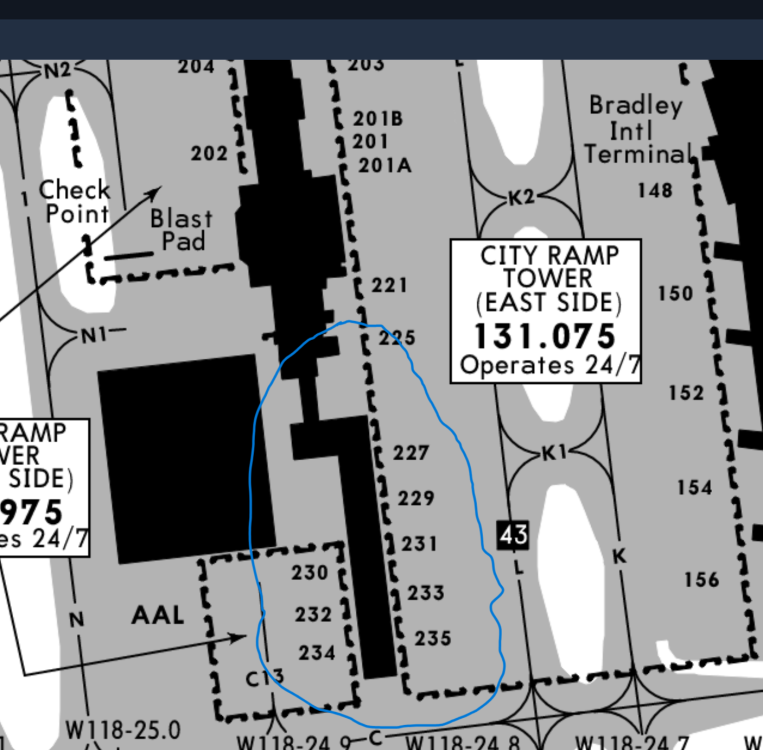
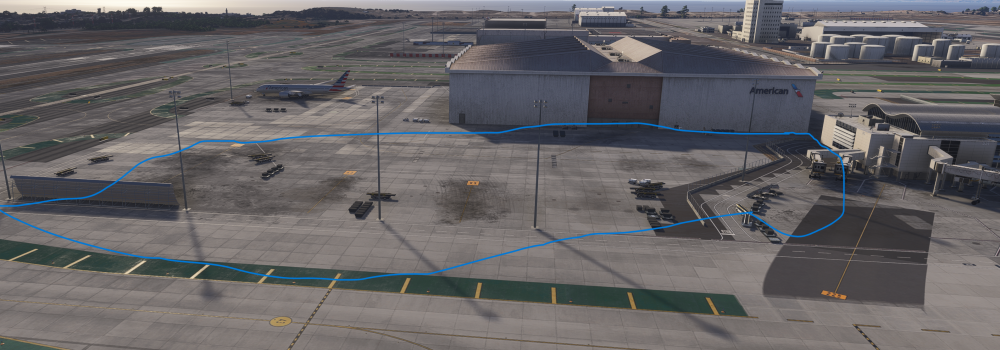
There is a missing terminal extension and gates at the Midfield Satellite Concourse at KLAX. I've attached 3 screenshots which show the missing extension, the gate numbers and the area where they should be.
-
etclinus joined the community
-
I also hat an issue with imported stepclimbs. But i need to take a closer look into this until i can provide further informations. I was at CRZ FL360, had two steps for FL380 and later FL400 set in the FMS. The first SC was stoped at FL376 and the FMA showed me ALT and VS -/+ 0. Not sure if some of the VNAV refinement for 1.2.7 collided with the autostepclimb logic.
-
Unfortunately they require a phone verification on their server to post. I am not willing to let Discord have my phone number and those provided by temporary phone websites are rejected by Discord. If that is a requirement to receive support from Synaptic that would be most unfortunate. If you could please forward the bug report to the developers. Thank you.
-
This very well could be the drag/perf issue reported to MSFS/Asobo. The team will have to do a little more research before we can confirm this though. We appreciate your patience!
-
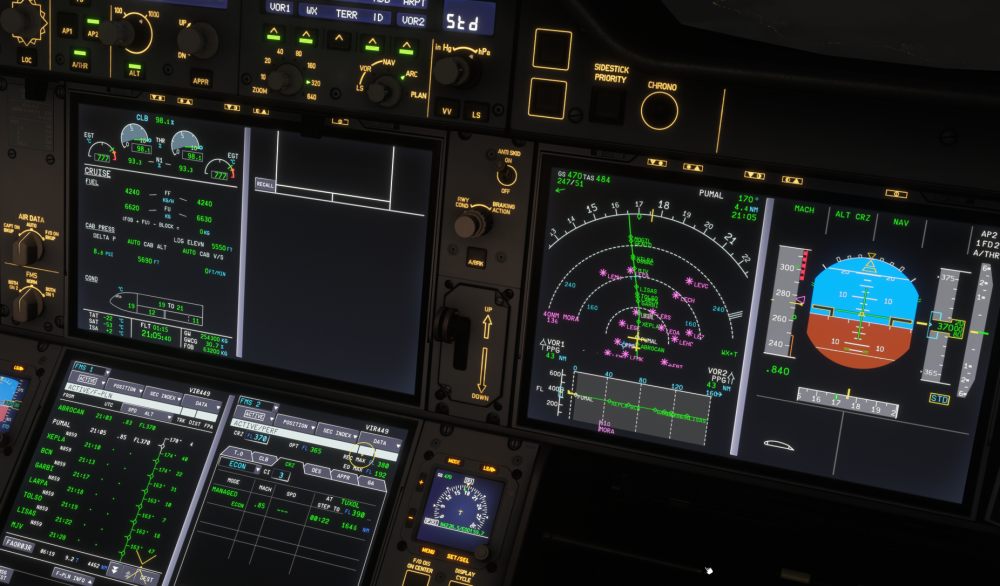
@iniKyle Is this potentially related to the MSFS update which made changes to drag profiles? The aircraft now struggles to climb above FL350 - regardless of weight. I've attached a photo where the aircraft has climbed to FL370 - well within the performance window, but is struggling to get to .85, so will inevitably run out of fuel as it demands more thrust trying to maintain the ECON speed... at cost index 3!!!
-
Interesting, thanks for the clarification. I will forward this to the team for further clarification. Appreciate you taking the time to explain!
-
Can you confirm you have a default aircraft selected on the free-flight section? Thanks!
-
Thanks for your report Mario. While I believe this is realistic behaviour, I will forward this to the dev team for further clarification. Thanks again 🙂
-
Thanks for your suggestion. I will forward this to the team for further clarification. Appreciate your patience 🙂
-
When you re-enable, does it show you which version it is? Thanks
-
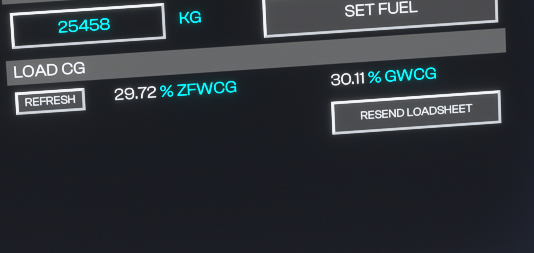
I read in the patch notes that there was now a button to request a final loadsheet (a very very good addition), but I was a bit confused by this button. Should it say "request" instead of "send"? Why is it "_re_send", actually? And why is there an "ARE YOU SURE YOU WANT TO DO THIS?" prompt? It felt very ominous 😂 Does the button request a prelim loadsheet if loading is not completed? Or does it present the current status, when the button is pressed, as a final loadsheet? If so I can agree it should have a confirmation prompt, but then I think that prompt should explain that. Something like REQUEST FINAL LOADSHEET would communicate its function a bit better I think. Thanks!
-
-
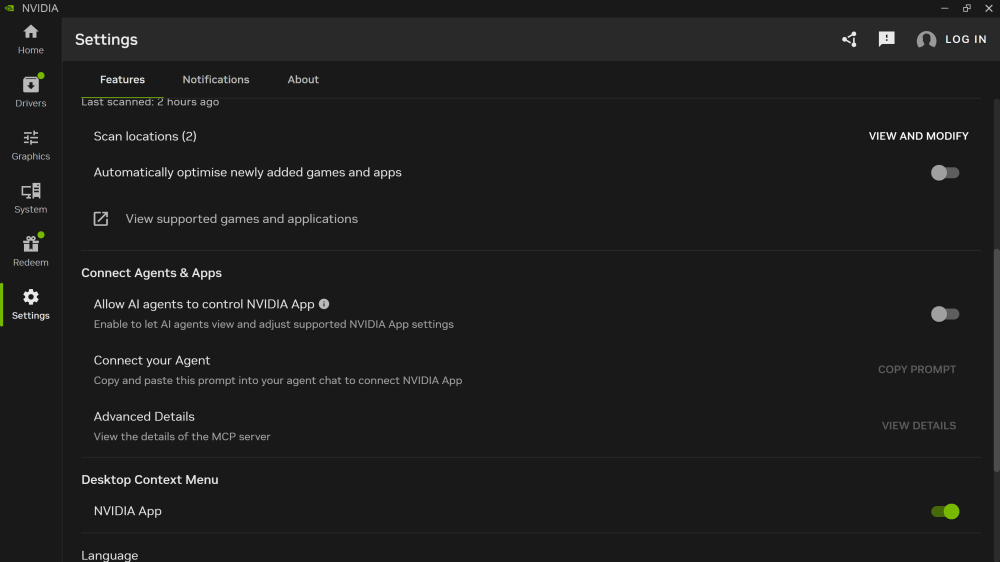
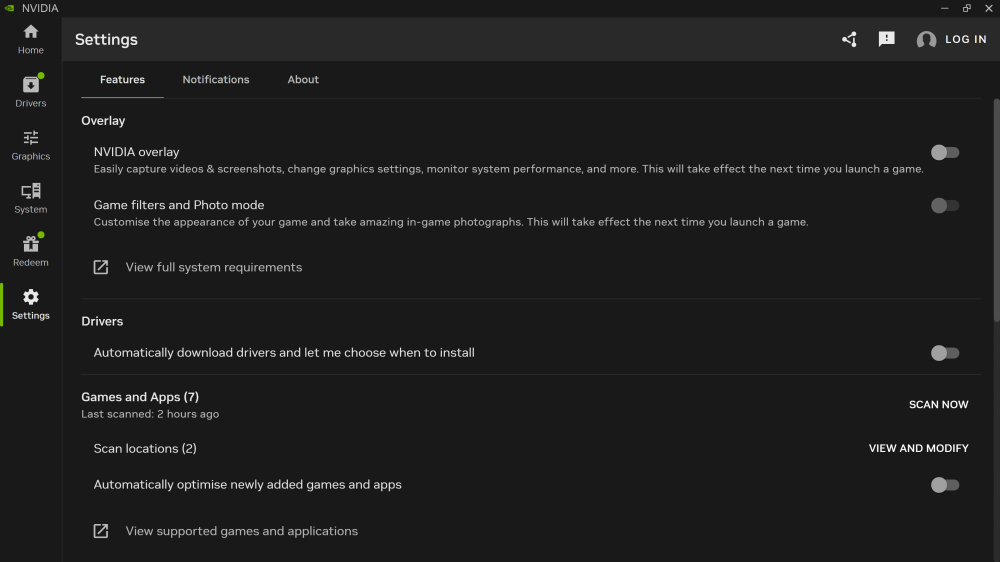
I'm streaming, and enable/disable does nothing.. I can't get past v1.0.3 please for the love of whatever entity you believe inibuild's please get this in the manager!!
-
I'm streaming the A380.. no matter what I try or do it is stuck on version 1.0.3 (disabled and enabled like 5 or 6 times)... any suggestions?
-
ok.... just loaded into a flight and stutters have come back slightly. Not as bad as before but was not as smooth as before.. I will keep looking into it and trying 😓
-
-
Thanks for the clarification. I believe I was thinking of something different. I will log this for the team to review as soon as possible!
-
To bad, you guys do a fantastic job modeling cabins!
-
-
Yes and no. In default works with blue highlight in locked mode, but the majority of third party aircraft like Fenix, BlueBird, iFly or PMDG keep the blue highlight away even in locked or in VR mode. In the iniA350 it’s possible to disable the blue highlight editing one .xml file called interactions or behavior or something like that, but I can’t find that file in the A380, maybe because is the MarketPlace version. Time ago in MSFS 2020 Fenix offers two separated interactions.xml files, one with the blue highlight and other one without it, because is a common sense in the sim community that this is an undesired effect.
-
-
Thanks for your report. It seems the aircraft believes the runway is too short. Will forward this to the team for review. Appreciate your patience 🙂


